
Bela, Wilson and 30 US colleges: padel's biggest structural bet yet
Tennis scholarships built careers for players from Spain, Argentina, France and beyond. The American college system quietly became one of the sport's most powerful development engines. Padel never had access to any of that. Until now.
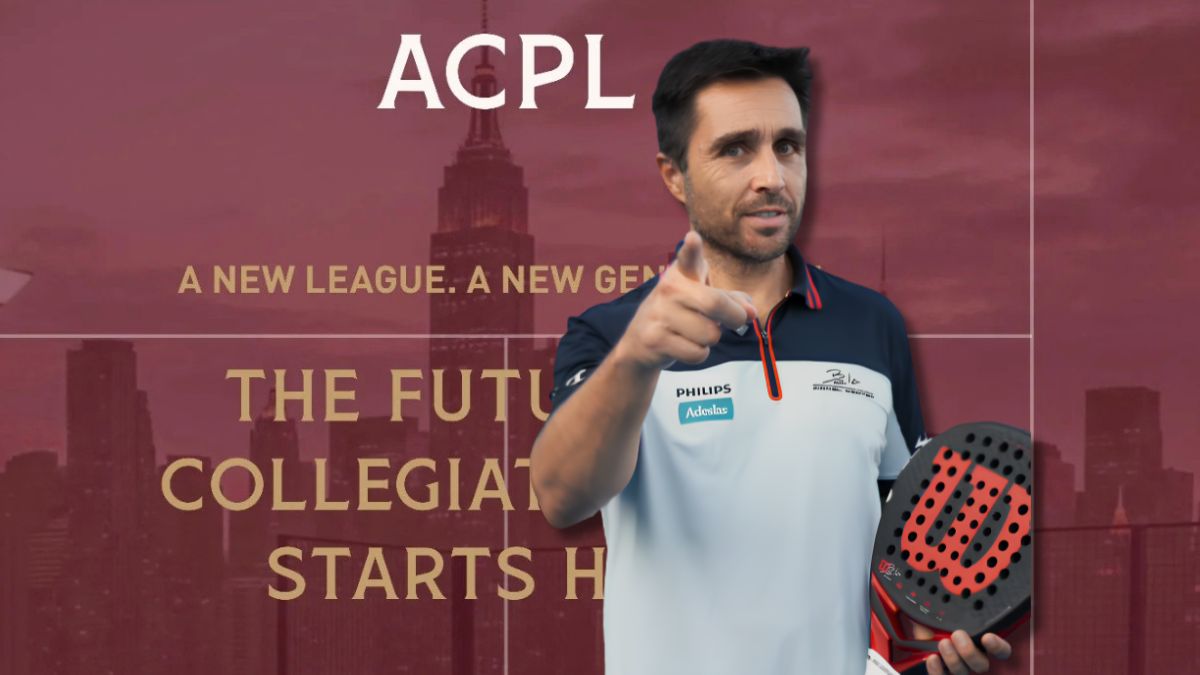
Fernando Belasteguín has been announced as lead ambassador and advisor for the Wilson ACPL, the American Collegiate Padel League, the first national collegiate padel competition in the United States. Wilson joins as founding partner and naming sponsor. The league launches this autumn with 30 universities, more than 200 student players, and a format built to run through to a national final in March.
How the ACPL actually works
The league is split into four regional divisions covering the country's main padel-active corridors:
- Atlantic (East Coast)
- Sunshine (Florida)
- Lone Star (Texas)
- Pacific (West Coast)
The season kicks off with qualifying matches this autumn, with the four regional champions converging in March to contest the first national title in league history. This is not a weekend pop-up or an experimental pilot. The ACPL has reportedly been building its foundation for months through a series of lead-up events in New York and other cities before making the formal announcement.
Padel just entered the American university system. That is a much bigger deal than it sounds.
Why Bela and Wilson change what this signals
The names attached to this project matter as much as the structure itself. Belasteguín is not just a legend in terms of titles. He is one of the few padel figures with genuine global name recognition outside the sport's existing audience. His involvement as advisor and ambassador is a signal to American universities, athletic departments and potential sponsors that this league is worth taking seriously.
Wilson, meanwhile, brings institutional credibility that no padel-only brand could replicate right now. They are already embedded in college tennis. They know how these programs operate, how equipment contracts work and how to build long-term relationships with athletic programs. As a naming sponsor they are not just putting a logo on a banner. They are betting on the structure itself.
For padel, the longer game here is about scholarships. The NCAA scholarship system has funded talent pipelines in tennis for decades, giving players from countries with limited resources a route into professional competition via a fully-funded education. Padel has never had equivalent access to that pipeline. But scholarships require a recognised league to exist first. The ACPL is that first step.
Nobody is claiming scholarships arrive next season. The road from inaugural league to NCAA recognition is long and involves regulatory processes that take years. But the sequencing matters: the hardest part is starting, and that has now been done, with the kind of backing that gives it a real chance of surviving its early years.
It is also worth noting what this means for player development more broadly. A functioning college padel circuit in the US creates competitive opportunities for student players who currently have no structured pathway. It creates a reason for universities to invest in courts and coaching. And over time, it creates a domestic audience that grows up watching collegiate padel the way Americans grow up watching college basketball or tennis.
The sport has spent years trying to crack the American market at the professional level, with mixed results. This approach is different: it is building from the inside of an institution that Americans already trust and follow. That is a smarter entry point than any exhibition event or pro tour stop.
The first matches are weeks away. By March, padel will have crowned its first-ever American collegiate national champion. That is a small moment in isolation. In context, it might be the most strategically significant thing the sport has done in the United States so far.
Fuente: Padel Addict
¿Quieres saber qué revela tu propio partido?
ANALIZA MI PARTIDO →